500 Years Madonna of Saint Sebastian

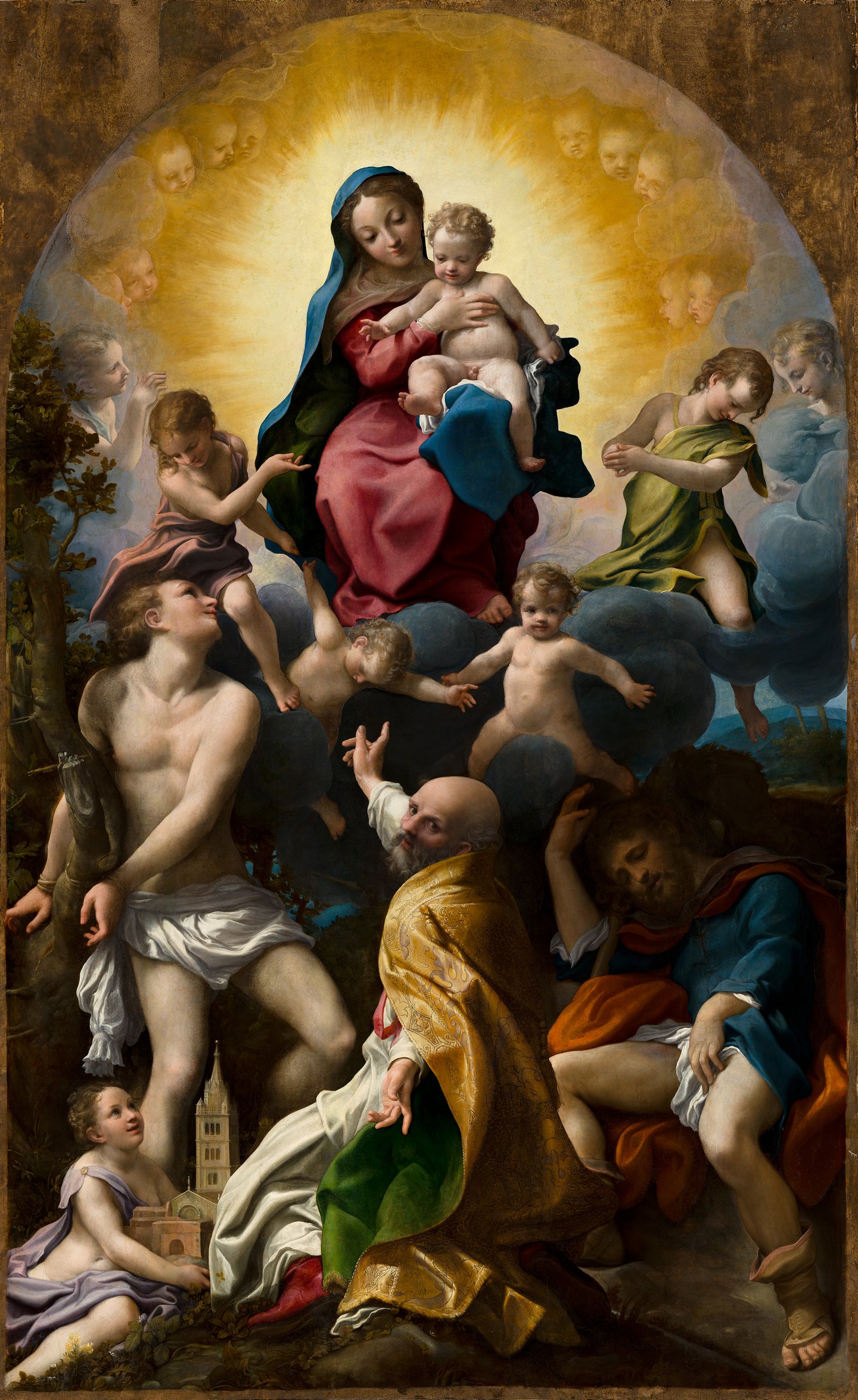
It was hung in churches and galleries, survived wars in tunnels, basements and other hiding places and has travelled by carriage, by train and by lorry, 5500 km in total. The story of this picture is one of wear and repair, of pomp and circumstance, of monks, agents, dukes and kings.
A Picture for the Confraternity (1524 - 1612)

Context of the Creation of the Madonna of Saint Sebastian

Duchy of Ferrara Modena and Reggio

Around the year 1500, what we know today as Italy is composed of many smaller states. One of them is the Duchy of Ferrara, Modena and Reggio.


Around 10 km from the city of Reggio sits the town of Correggio. The painter Antonio Allegri, today called “Correggio” for short, is born here c. 1489.


He will spend all c. 45 years of his life within 50 km of his hometown.
Alfonso I d'Este

The Duchy of Ferrara, Modena and Reggio is ruled by the House of Este. During Correggio's productive period, the house is led by Alfonso I d’Este, who leads the duchy into a cultural golden age and achieves many military victories.

Following the plague pandemics of the 13th century, Saint Sebastian is worshipped in many places. His in­vocation is said to have ended the plague of Justinian in the Eastern Roman Empire during the 7th century.

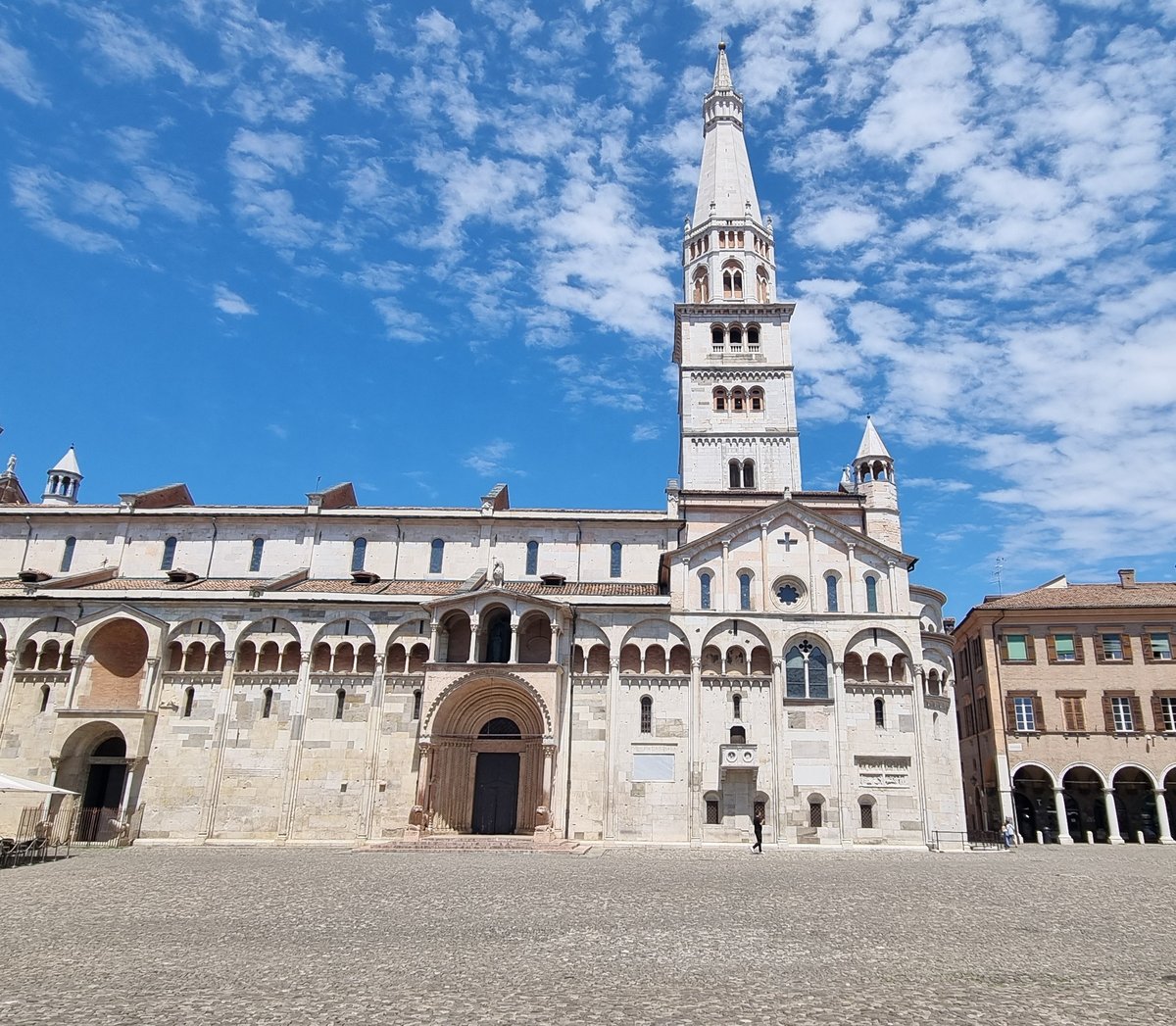
In Modena, the Confraternity of Saint Sebastian is created. At the beginning of the 16th century, a devotional painting is needed for the church of their order. The exact location where it will be hung is not known, but it may have been a chapel within the Modena Cathedral. The commission goes to Correggio, who completes the picture in 1524.

Subjects of the Painting

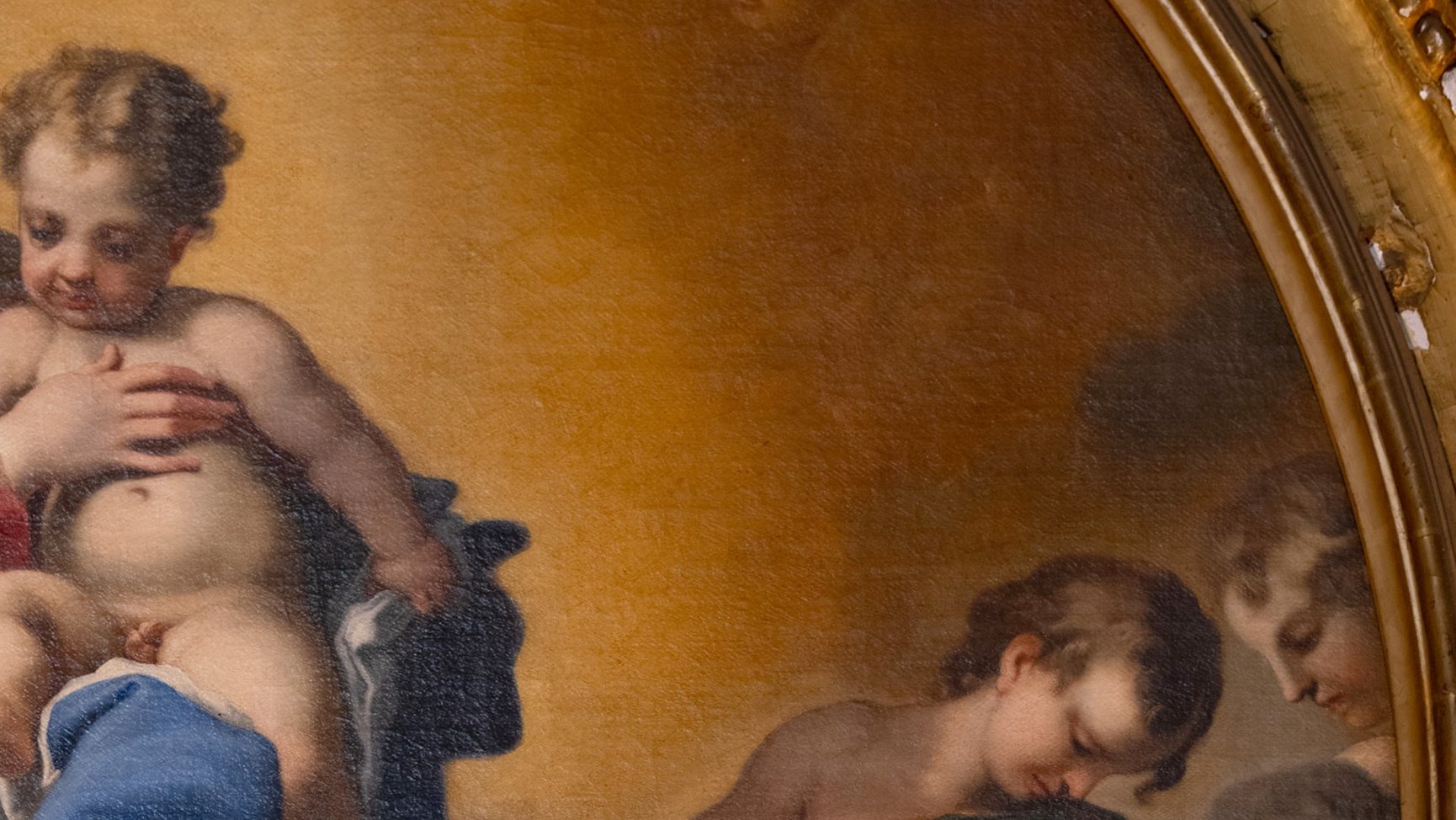
Even early on, the picture is copied by other artists. Their replicas are not only testament to their adoration, but they also document changes made to the picture in the past.

Bertelli Engraving

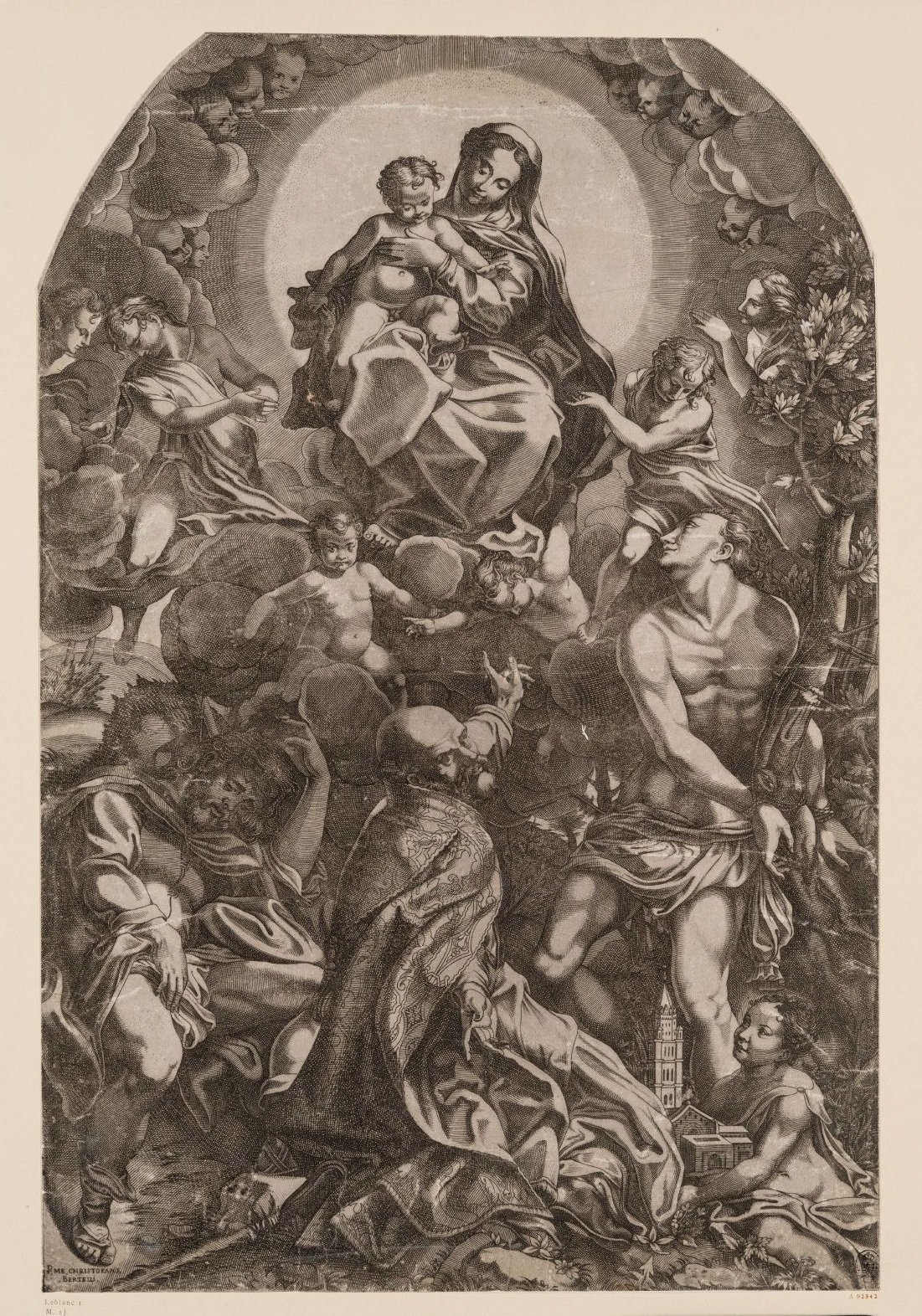
Between 1526 and 1580, Cristofano Bertelli creates the earliest known copy of the painting. Since he etches the printing plate according to his study of the painting, which is then turned and pressed onto paper, his artwork shows a mirrored image.

Bertelli’s print is a major resource for the restoration, enabling valuable conclusions about the original state of the painting.

Only 50 years after the completion of the Madonna of Saint Sebastian, it is noted that the state of the painting is poor and uncared-for

Consequently a – from today’s point of view fatal – restoration effort is made in 1611.

In Sunlight

The restoration is entrusted to Ercole dell’Abate. He takes the picture out of the rather dark and damp church building and places it in the sunlight to “let the heat even out the colours”, as an early comment reads.

This very likely causes the poplar wood boards to warp and separate from the canvas strips at the joints. Dell’Abate’s intervention almost certainly does more damage than it repaired.

Consequently, the joints are where the picture will be most damaged and most repaired.

A Picture for the Duke (1612 - 1742)

The Madonna of Saint Sebastian in the Collection of the House of Este

modena, accademia

Modena becomes the Royal Residence

In 1598, after the Duchy of Ferrara, Modena and Reggio has to give up lands around Ferrara to the Papal States, Modena becomes the capital city of the duchy and the place of residence for the House of Este.

Franceso I and the Former Glory of the Duchy

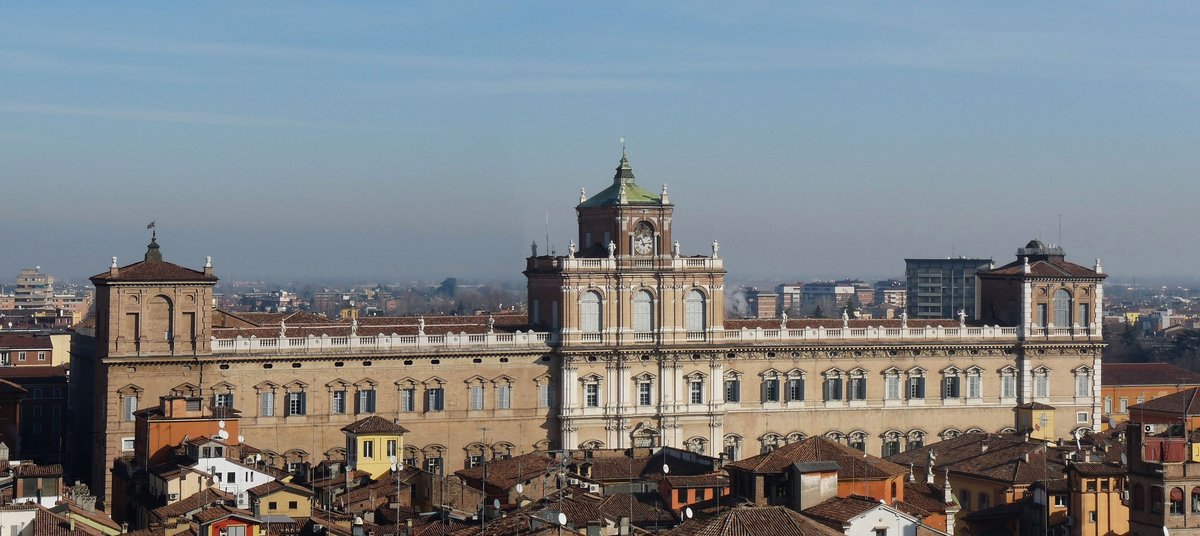
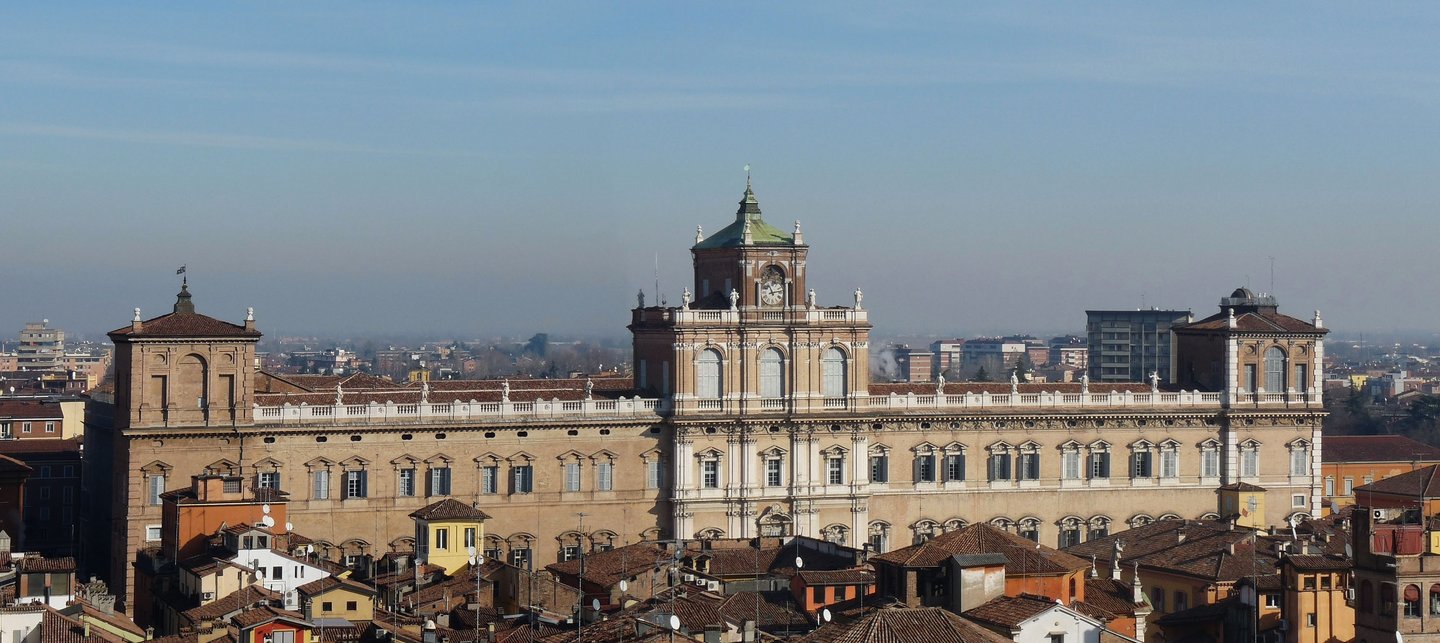
From 1629, Francesco I, Duke of Modena and Reggio, rules the duchy. He develops the capital city Modena into a grand cultural hub and has a palace built there.

Within it, the Estensi will soon house one of the most spectacular art collections of the time.

Santa Maria della Pomposa

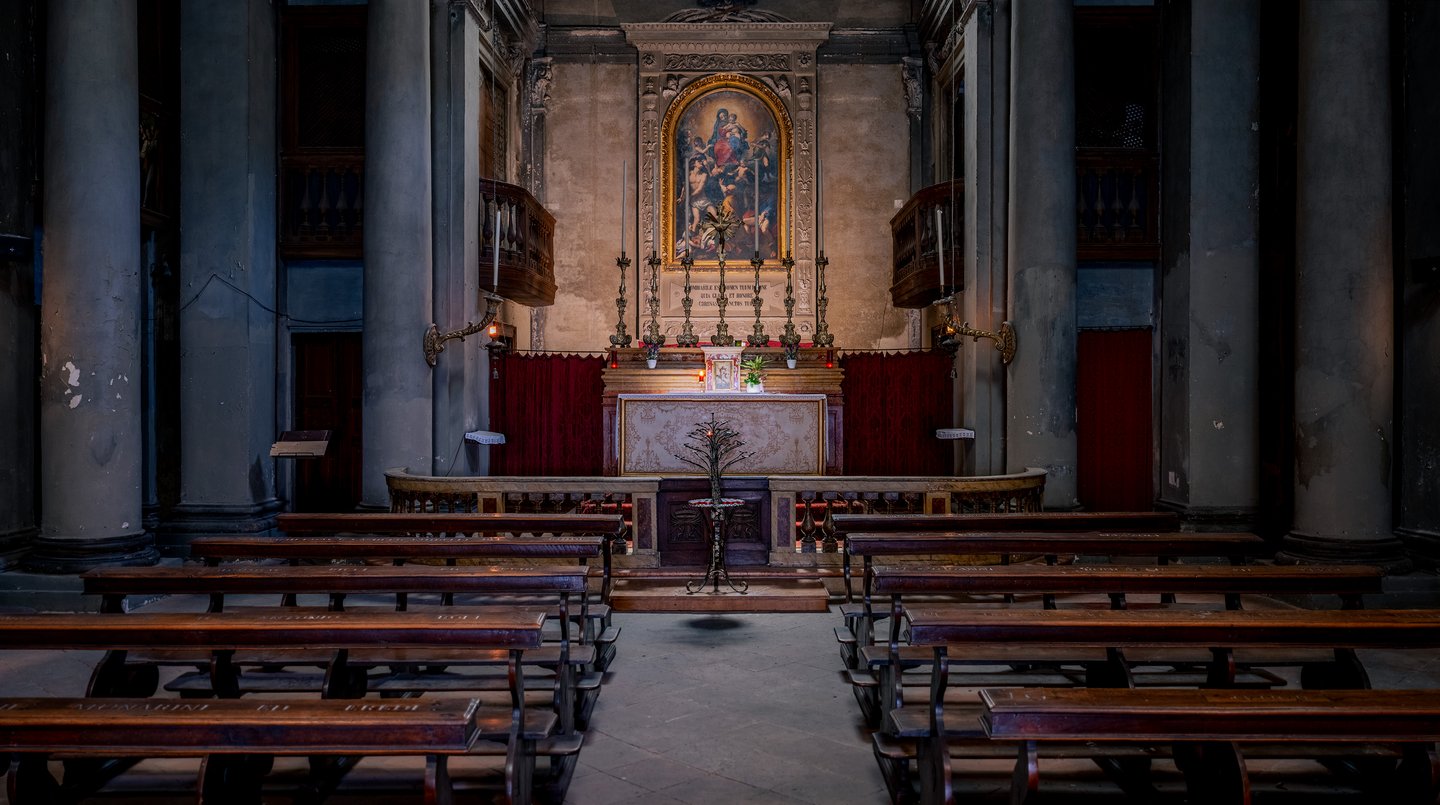
He has Correggio’s painting brought to his court in 1657. In exchange, he gives a copy of the painting by Jean Boulanger to the confraternity, which hangs at the church of Santa Maria della Pomposa in Modena today.

Boulanger’s copy differs from Correggio‘s original painting. For example, the arrow in Sebastian’s hip and two of the angels’ heads are lost.


Changes like these can be retraced across the history of the painting using that history itself and other reproductions.

A Second Restoration

One year after the painting comes into his possession, Francesco I dies of severe illness. His son Alfonso inherits the duchy alongside the extensive art collection and has the Madonna of Saint Sebastian restored once again.

This time, the commission goes to the painter Flaminio Torri, to whom Alfonso IV also transfers the direction of the art collection.

Around 1700, the small Italian states increasingly become war theatres for the European superpowers Spain, France and Austria. 

The Duchy of Modena and Reggio, by now under ruler Francesco III, is also drawn into battle and consequently suffers financial hardship. In 1742, during the War of the Austrian Succession, Modena is finally occupied.

Francesco III flees to Venice and leaves his art collection behind.

A Picture for Augustus (1742 - 1756)

The Madonna of Saint Sebastian Comes to Dresden

In the middle of the 18th century, the House of Este is in an unfortunate situation. Its lands are occupied, the family has fled to Venice and their financial hardship is so severe that something unspeakable must be considered. There is growing discussion about selling off parts of the art collection.

As the occupying forces do not appoint new officials to the administrative offices in Modena, Francesco III’s staff largely remains in post. Thus, despite the occupation, the loyal castle steward Toretti manages to safeguard the family’s most precious possessions.

Hiding places in the Palazzo Ducale and the Convent

Part of the art collection is hidden in the Palazzo Ducale and another part in the Salesian convent. Some items are built into the walls, whilst the craftsmen and any nuns who are too talkative are sent to other towns. The hiding places are kept under the strictest secrecy.

modena, accademia

Augustus III

At the same time, a different European ruler is looking to expand the art collection of his house. Though he is beset by wars as well, against all odds, his state’s strong economy seems to supply him with nearly inexhaustible resources: Augustus III, son of Augustus the Strong, King of Poland and Elector of Saxony.

Enter Bonventura Rossi

He assigns agents to make purchases for him in Italy. Among them is Bonventura Rossi, brother of the Saxon court painter Lorenzo Rossi, who travels the Italian regions under a false name and is very successful in purchasing paintings for the Saxon court.


In 1744, he receives the top-secret order to purchase the Modenese gallery. What follows will go down in history as perhaps the greatest art trade of the 18th century.

100,000 Sequins

After Rossi, who appears “in disguise and wearing a mask”, views the hidden paintings in Modena, a contract is finally drawn up in 1745 to purchase 100 works from the Este collection for the sum of 100,000 sequins. The pure gold value of this sum would be around €42,000,000 today.


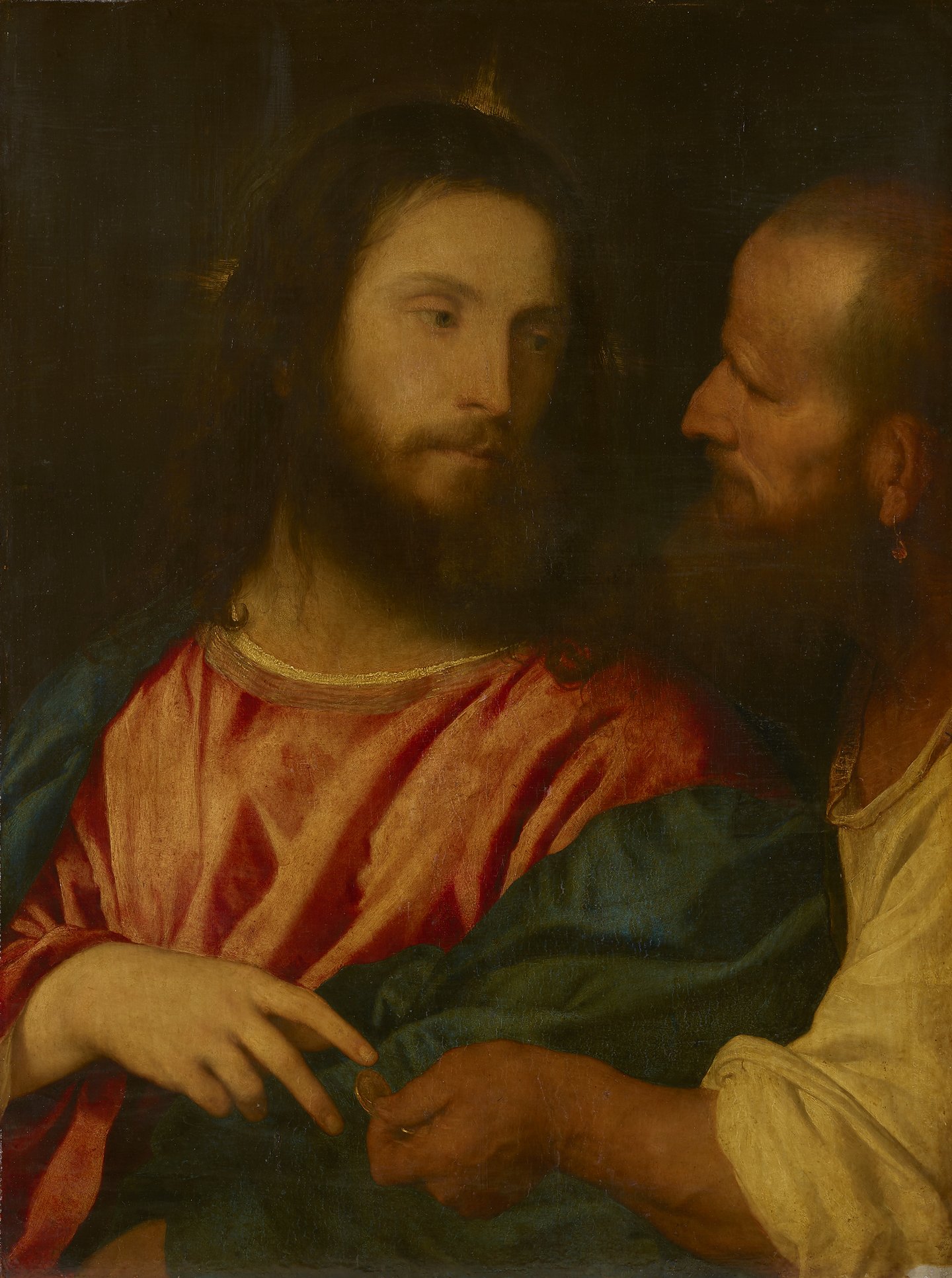
Among the highlights of the purchase is Titian’s The Tribute Money (c. 1516).

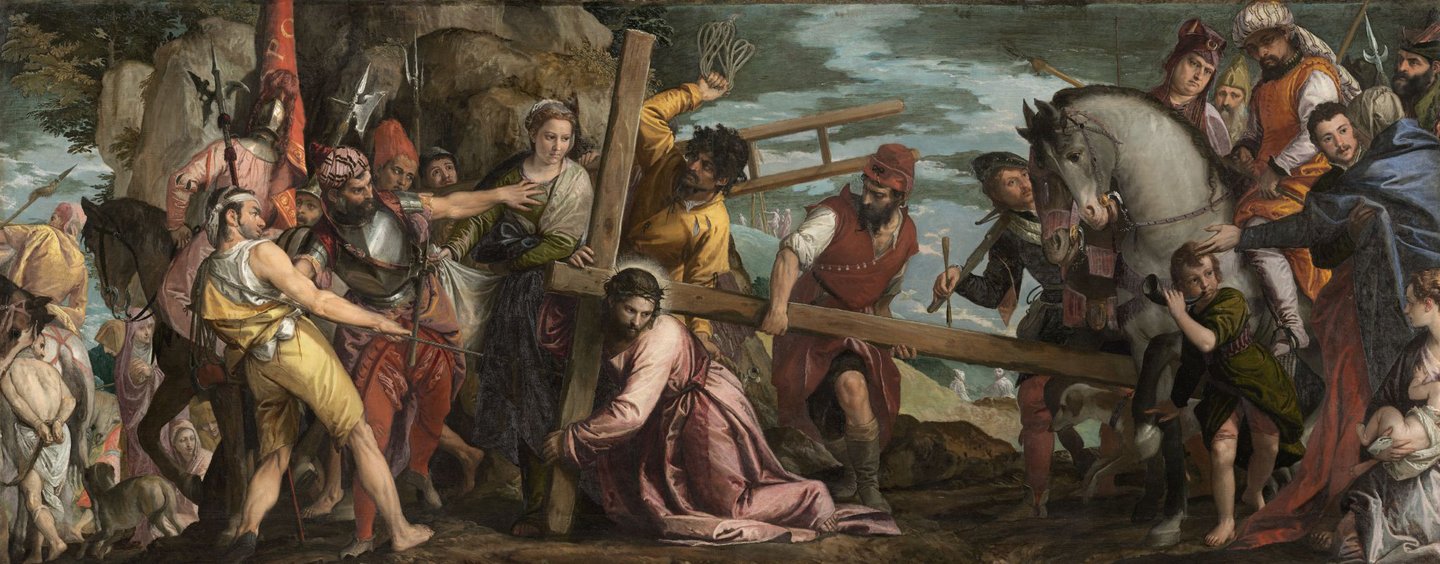
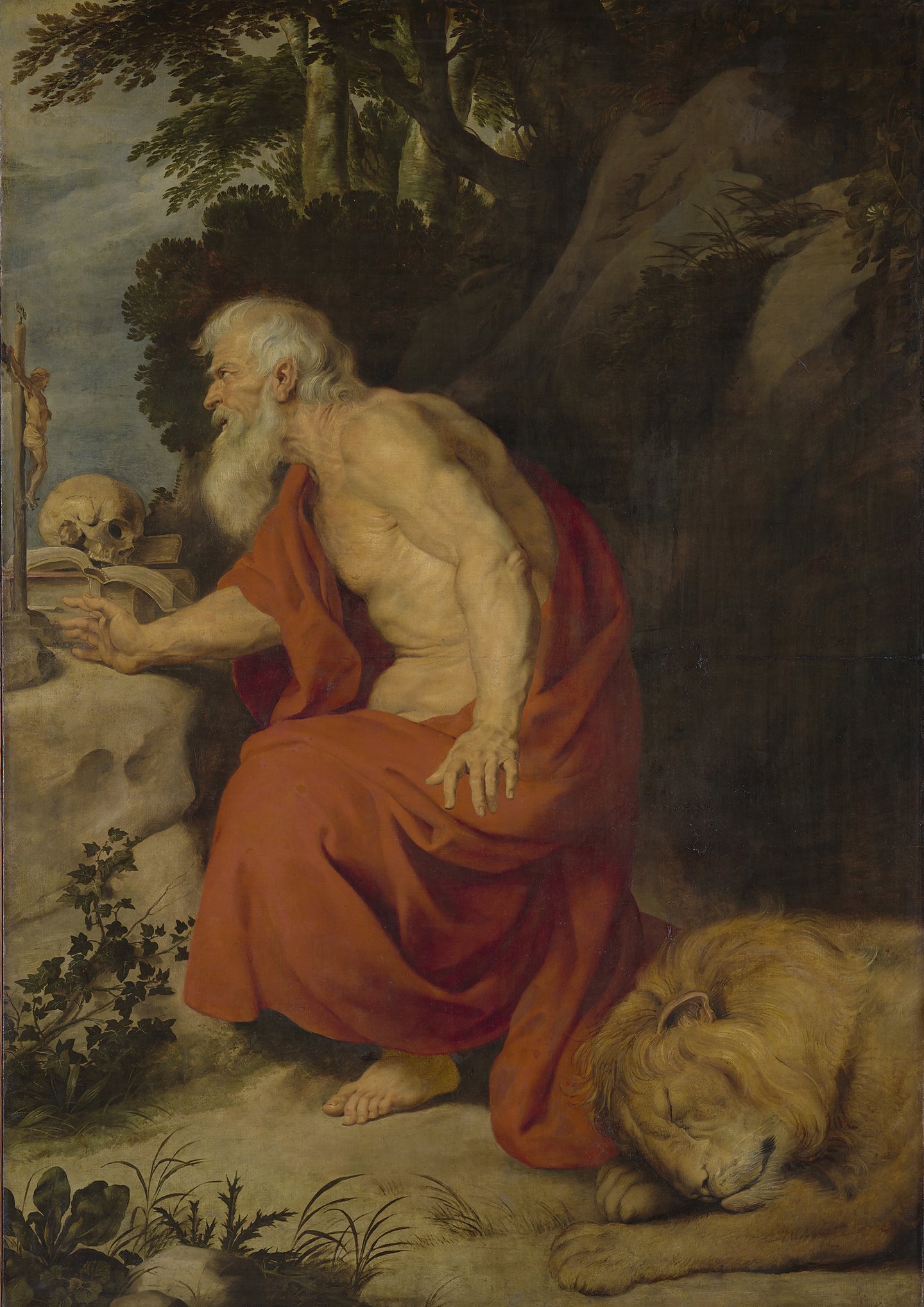
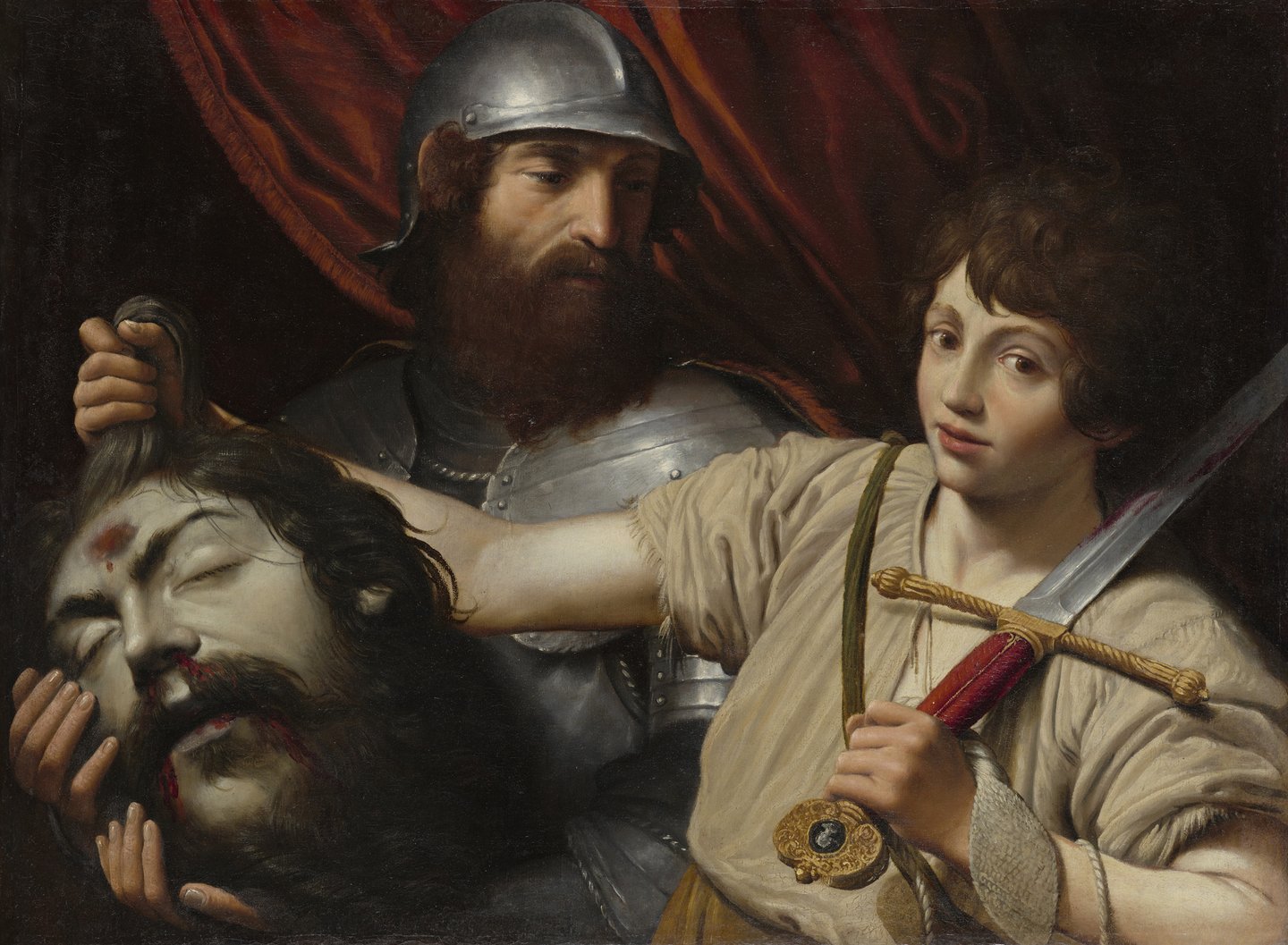
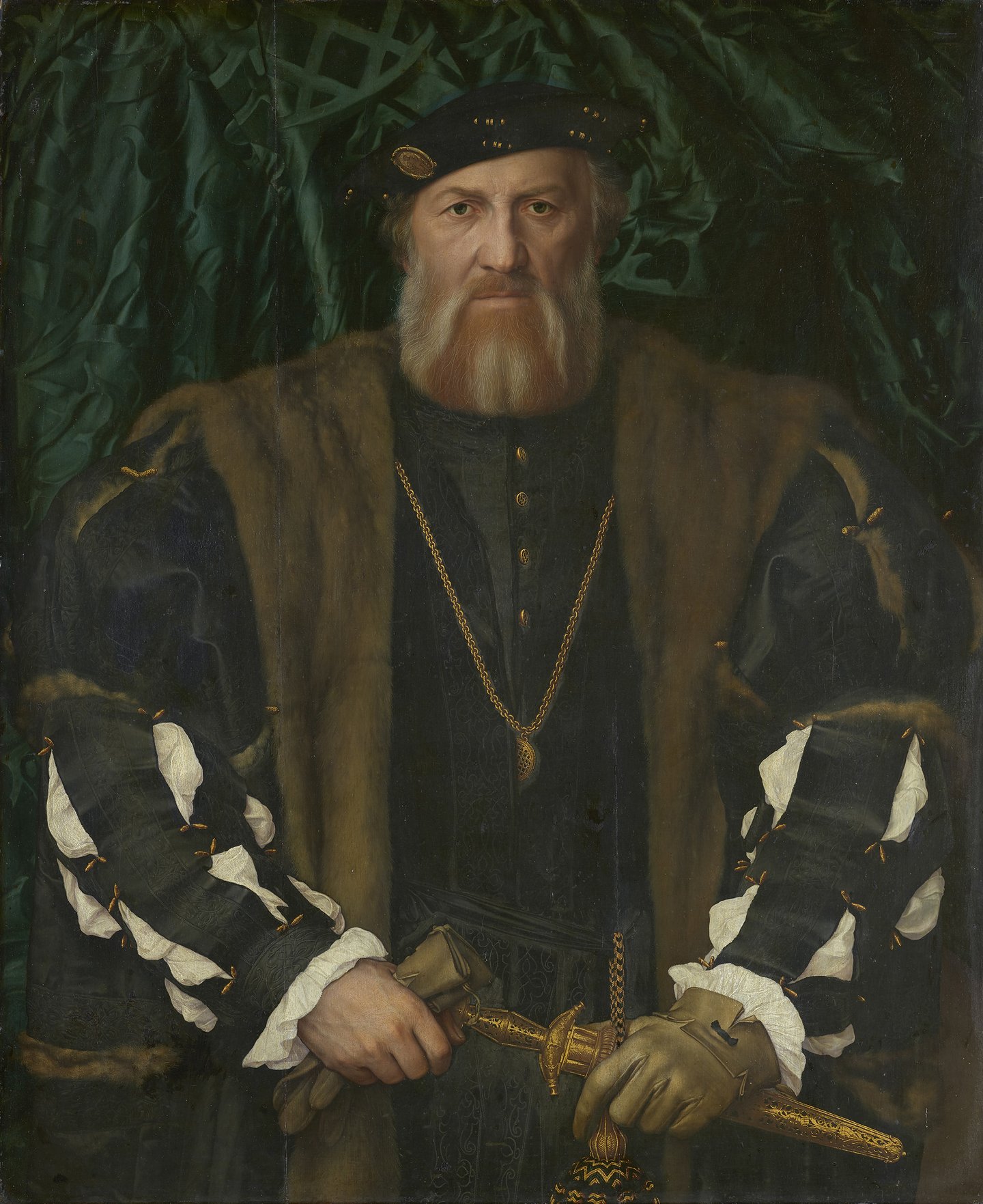
Among the purchased artworks are paintings by Antonis van Dyck, Peter Paul Rubens, Diego Velázquez, Parmigianino, Paolo Veronese, Leonardo da Vinci (the painting was later attributed to Hans Holdbein the Younger), Titian, Annibale Caracci and various other, predominantly Italian, painters, and five paintings attributed to Correggio. One of them is the Madonna of Saint Sebastian.

The Way to Dresden

Naturally, such a deal does not go down without some difficulties. Still, by the end of the summer of 1745, Rossi manages to have the paintings transported to his estate in Padua. They are finally sent to Dresden in 1746. They are transported across the Alps in five specially constructed wagons, each 6.85 metres wide and 10.30 metres long.


The exact route has not been recorded, but three years later, another art transport takes the Sistine Madonna via Venice, Bolzano, Innsbruck, Augsburg, Nuremberg and Leipzig to Dresden, as this was considered the flattest route. It is therefore reasonable to assume that Rossi also takes this route.

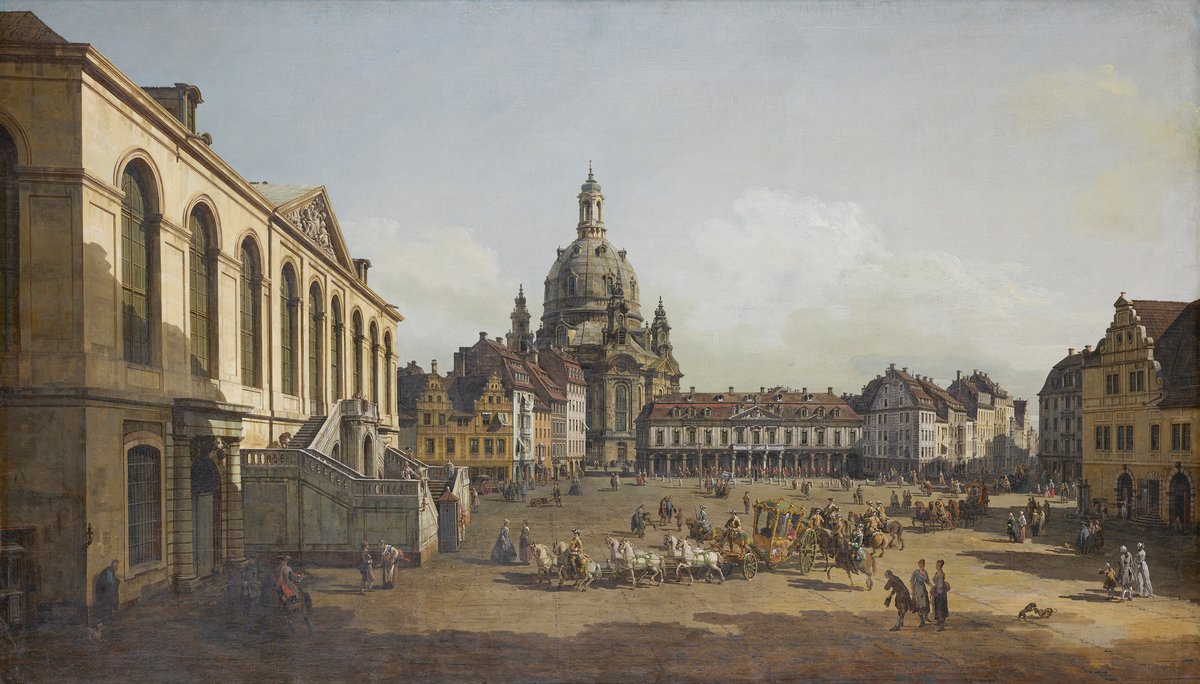
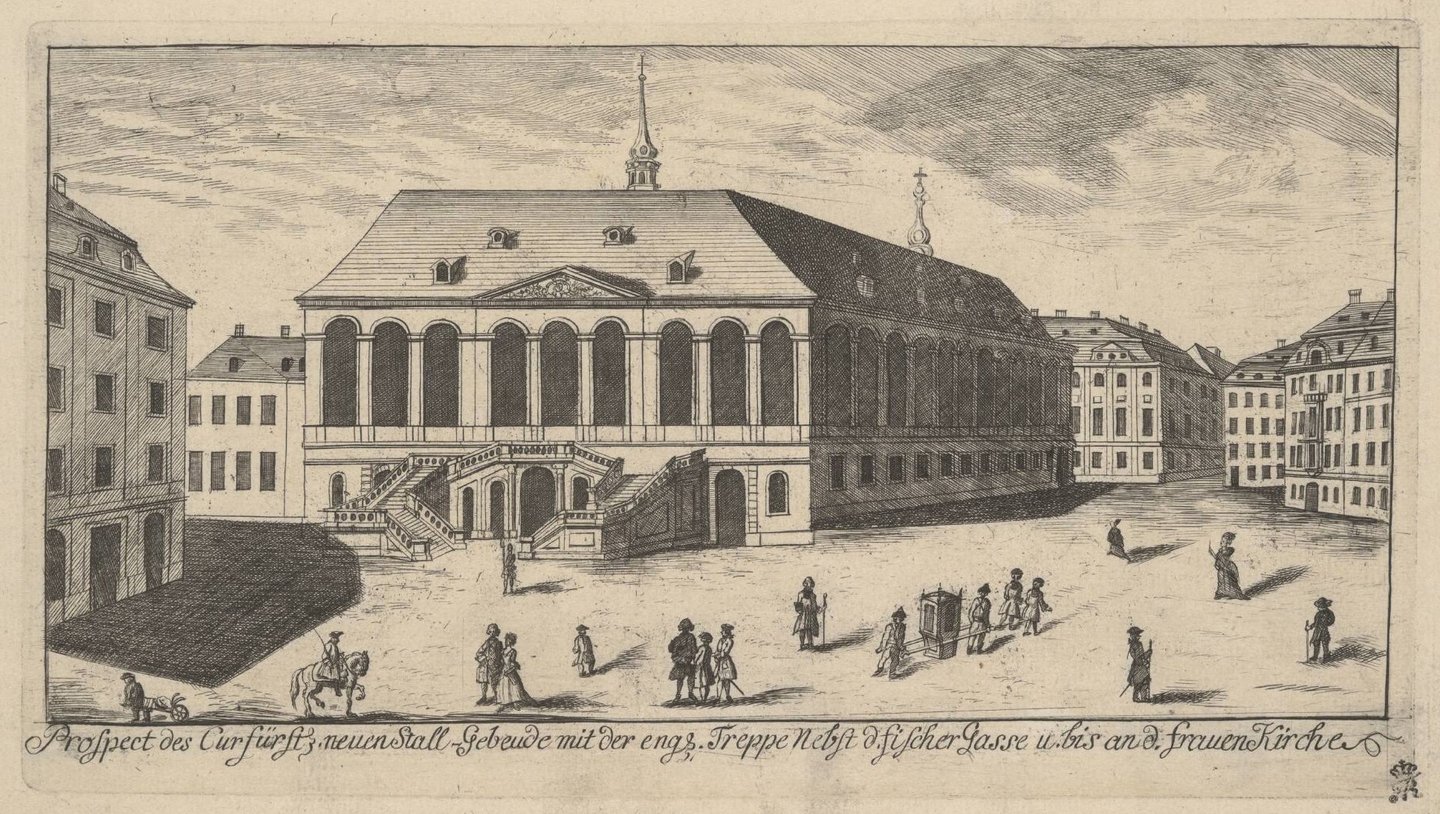
Upon their arrival, the paintings are hung in the Electoral Stallgebäude (now the Johanneum), which Augustus III designates as the venue for displaying his rapidly expanding art collection.

With the new acquisitions from Modena and, shortly afterwards, Raphael’s Sistine Madonna, the Saxon art collection rises to the very top echelons in Europe.

The long transport to the Saxon capital causes more damage to Correggio's Madonna of Saint Sebastian, leading to yet another restoration being commissioned. Its success is contested.

The gaps had been filled in, the cracks painted over with broad streaks of oil paint, and the halo painted over with brown paint – perhaps because, at that time, people preferred brownish rather than light-coloured paintings, or because the unskilled restorers knew of no other way to conceal the damage. [...] As the oil paint could not bond with the underlying painting or be absorbed by it, this overpainting had darkened considerably. …

— Johann Gottlob von Quandt (1787 - 1859), Saxon Art Historian, patron and head of the Department of Painting and Sculpture at the Sächsicher Altertumsverein

A Picture in the Saxon Collection (1756 - 1938)

The Madonna of Saint Sebastian in Dresden and Königstein

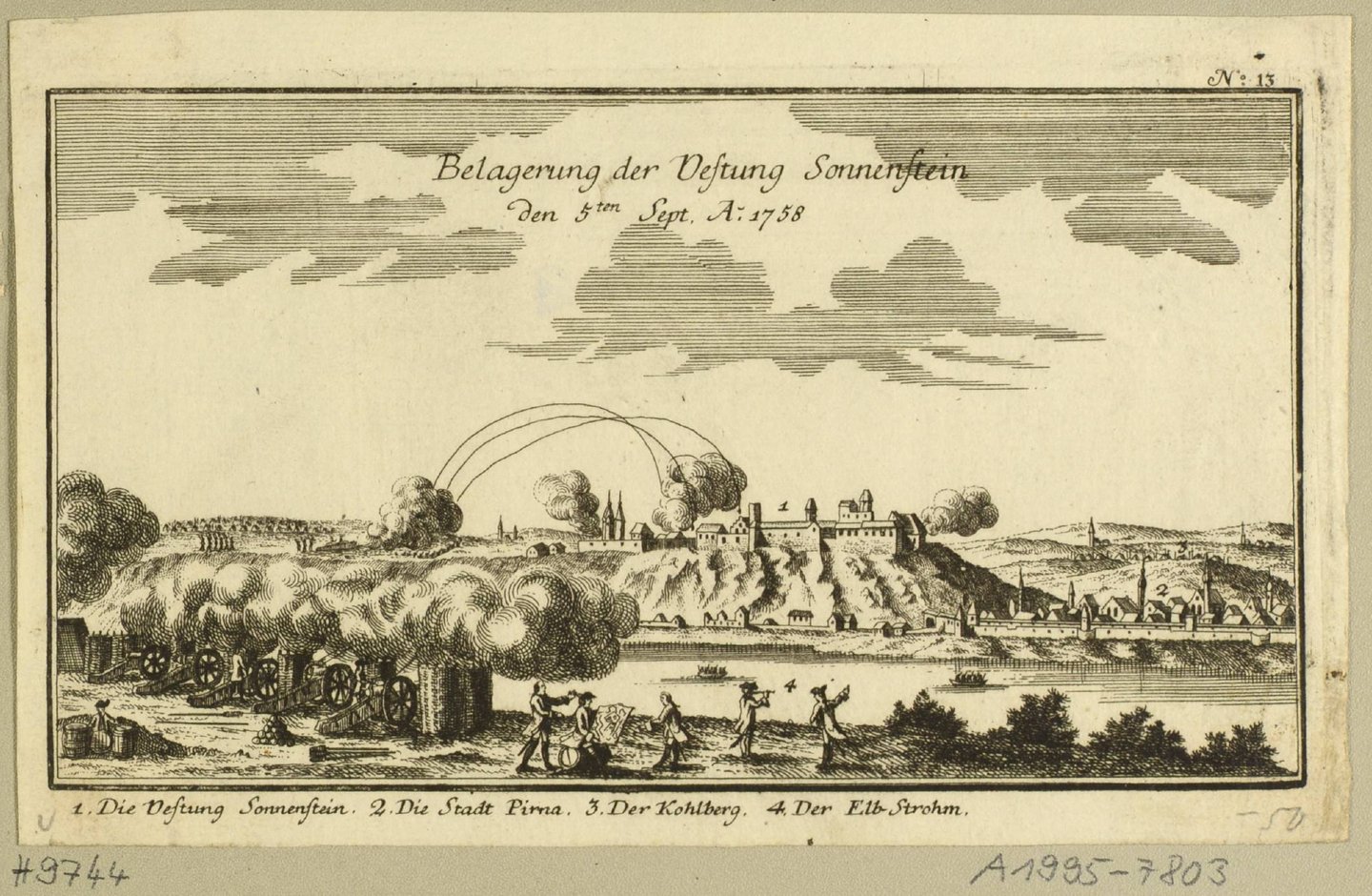
In 1756, just a few years after the Madonna of Saint Sebastian arrives in Dresden, Prussian troops cross the Saxon border. The Seven Years’ War begins.

The Saxon troops gather in Pirna, where they are surrounded by the vastly superior Prussian army.

Seven Years' War

Königstein Fortress

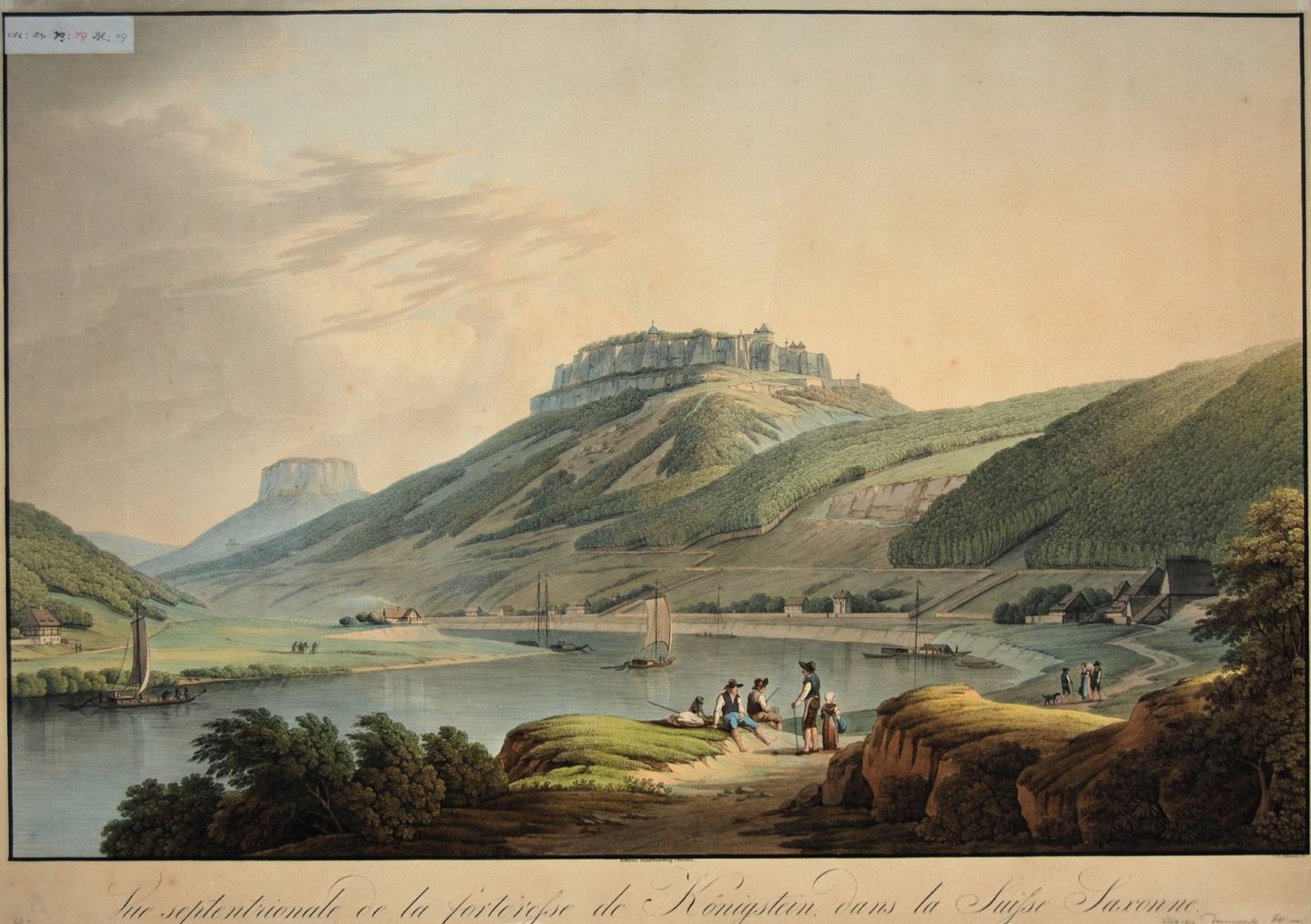
After a five-month siege, a document of surrender is signed. Königstein Fortress, to which Augustus III has retreated, is designated as neutral territory as part of the terms of surrender.

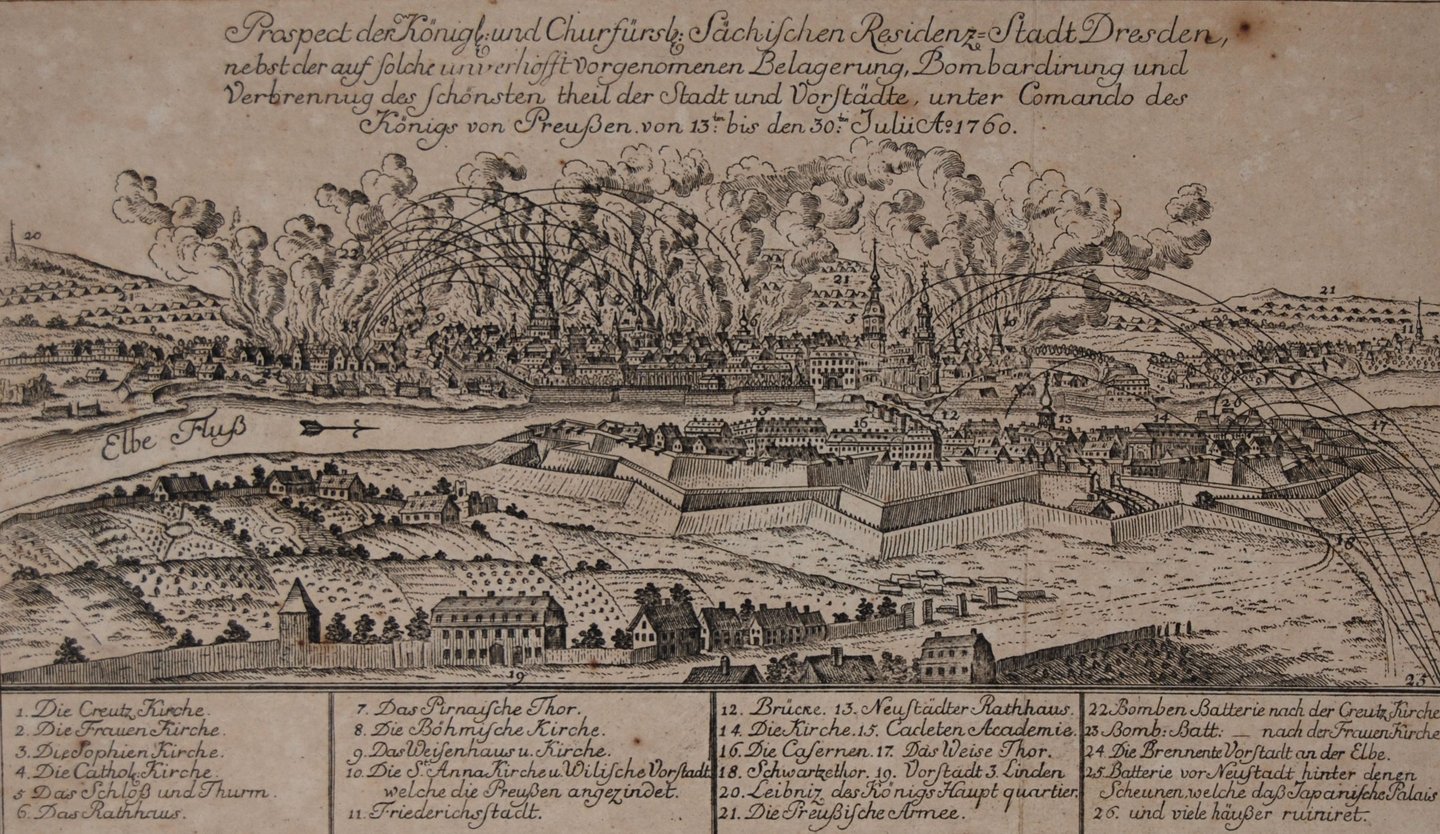
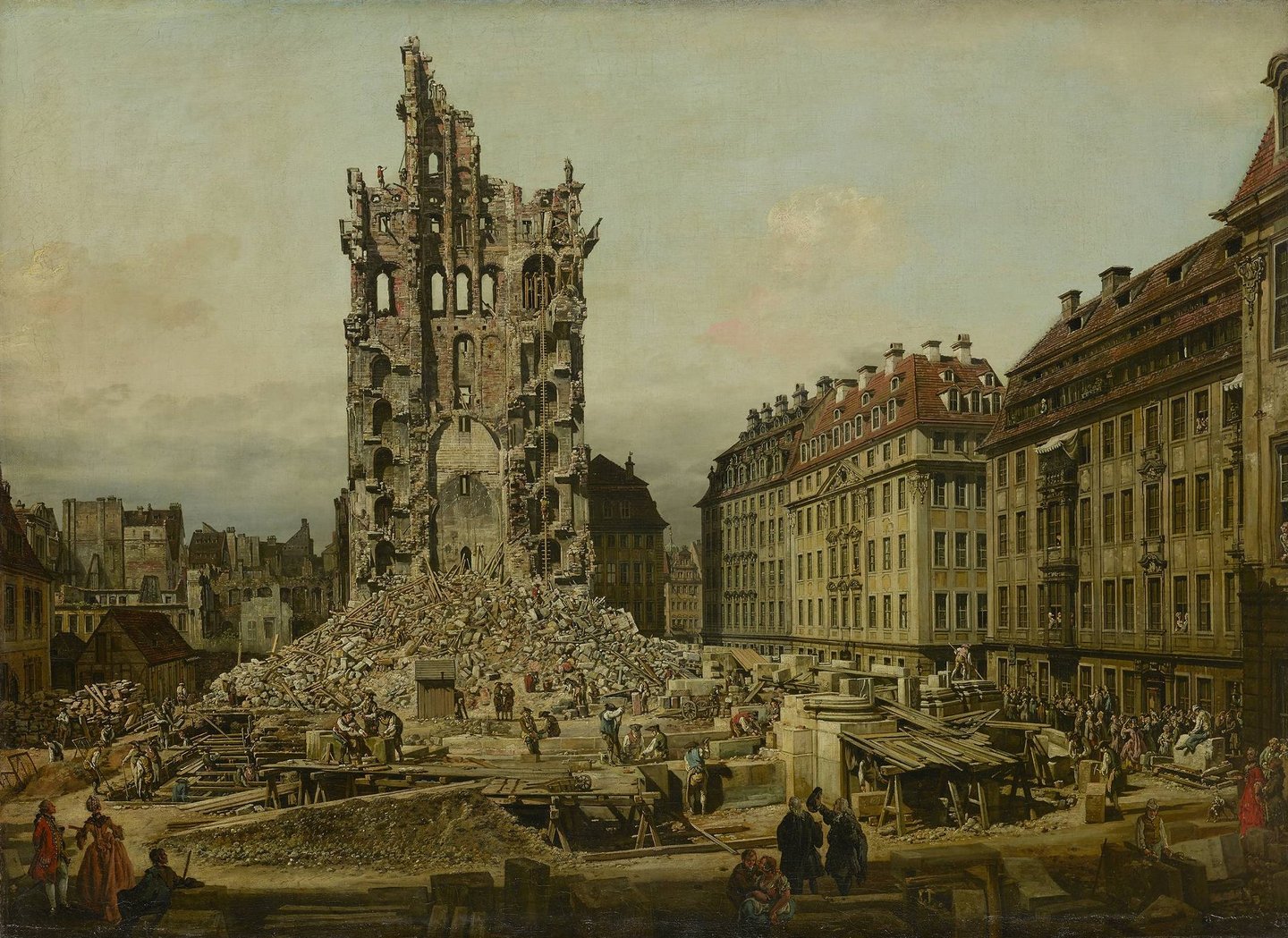
In September 1759, the Madonna of Saint Sebastian is taken to Königstein Fortress along with other works, as the Prussian king has parts of Dresden burnt down in preparation for the confrontation with the Austrian army. When the Austrians finally take control of Dresden, the Prussians bombard the city in 1760, with devastating consequences.

The gallery building is spared. The artworks are returned as early as 1763. Yet even in times of peace, art requires care. The condition of the devotional painting has suffered as a result of the climatic conditions at Königstein Fortress.

As is well known, the panels of this painting have warped; naturally, cracks have formed, and as a result the overlying layer of primer and paint has become hollow. This tragedy affects several beautiful sections, including a child’s head – what is to be done here? If one removes the flaking paint, as the current restorer is doing, irreparable damage will have been done. How presumptuous would it be to attempt to restore this marvel of painting in such a way? ..."

— Johann Joseph Schweigart (1789 - 18??), Deputy Inspector of the Dresden Picture Gallery and co-author of many painting catalogues in the early 19th century

Semper Building

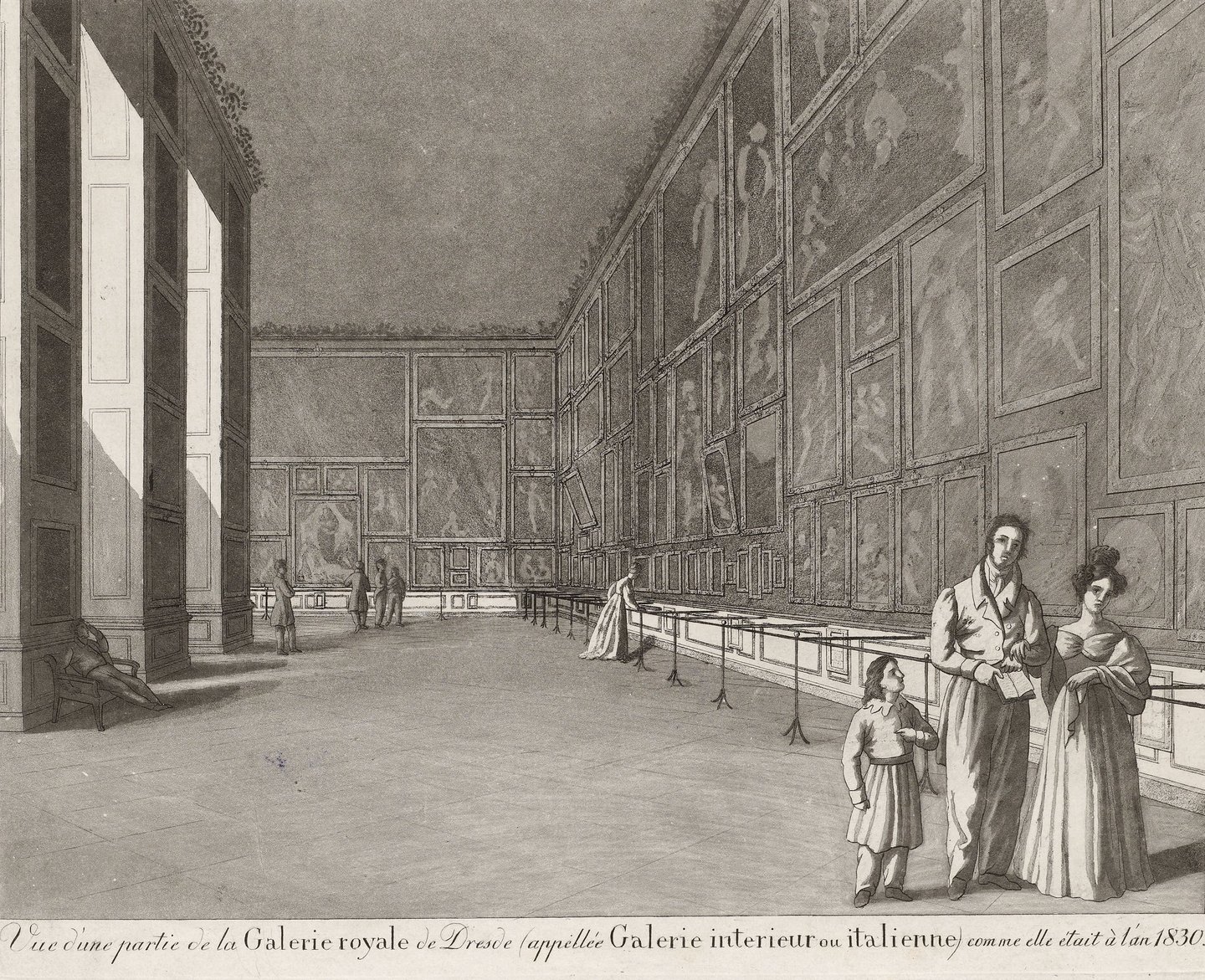
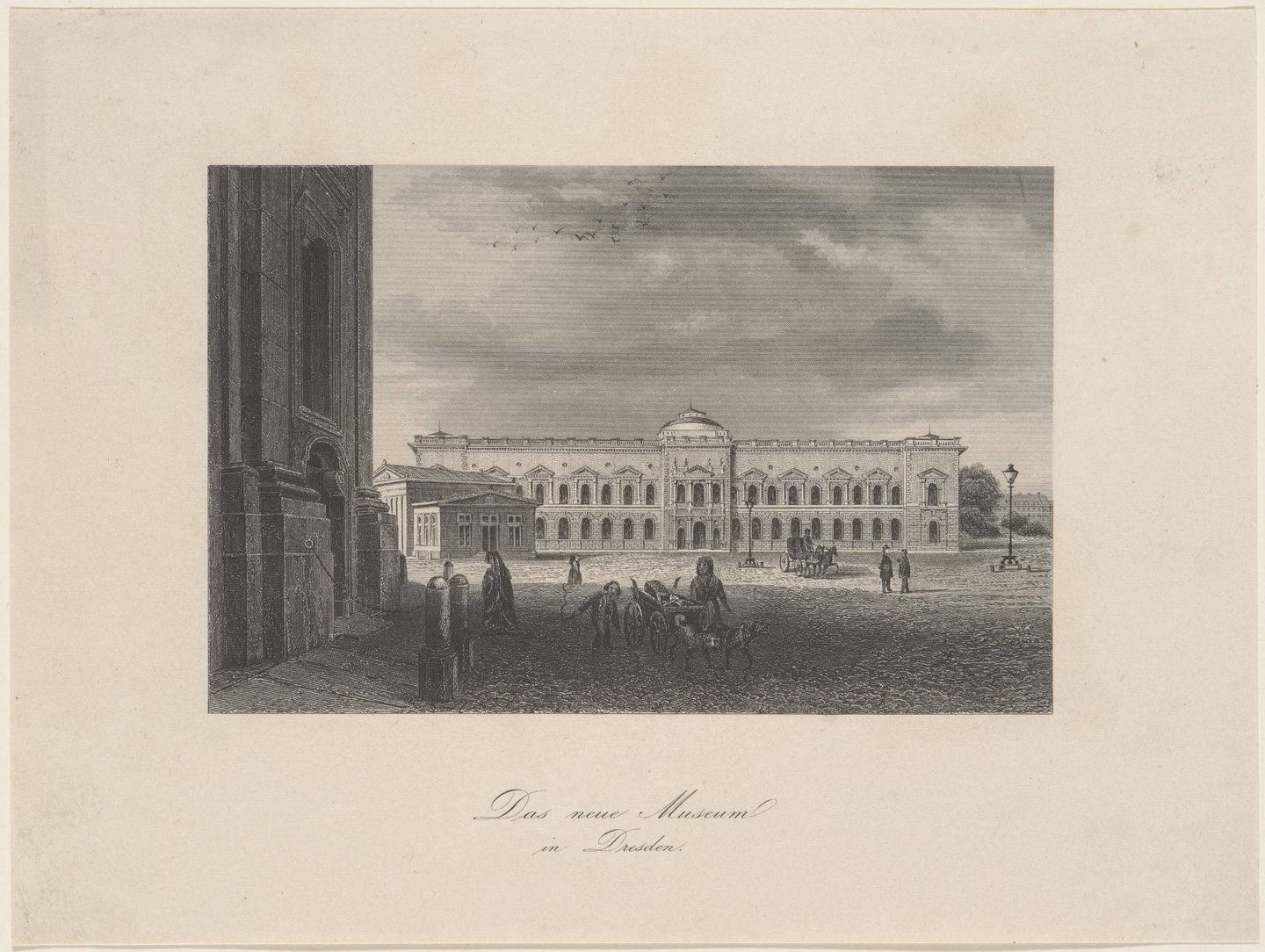
In the 1840s, Frederick Augustus II, King of Saxony, commissions the famous architect Gottfried Semper to build a new gallery building. It is not until 1855 that the building, now known as the Semper Gallery, opens at the Zwinger.

A Picture in the Tunnel (1938 - 1955)

The Madonna of Saint Sebastian during the Second World War and in the USSR

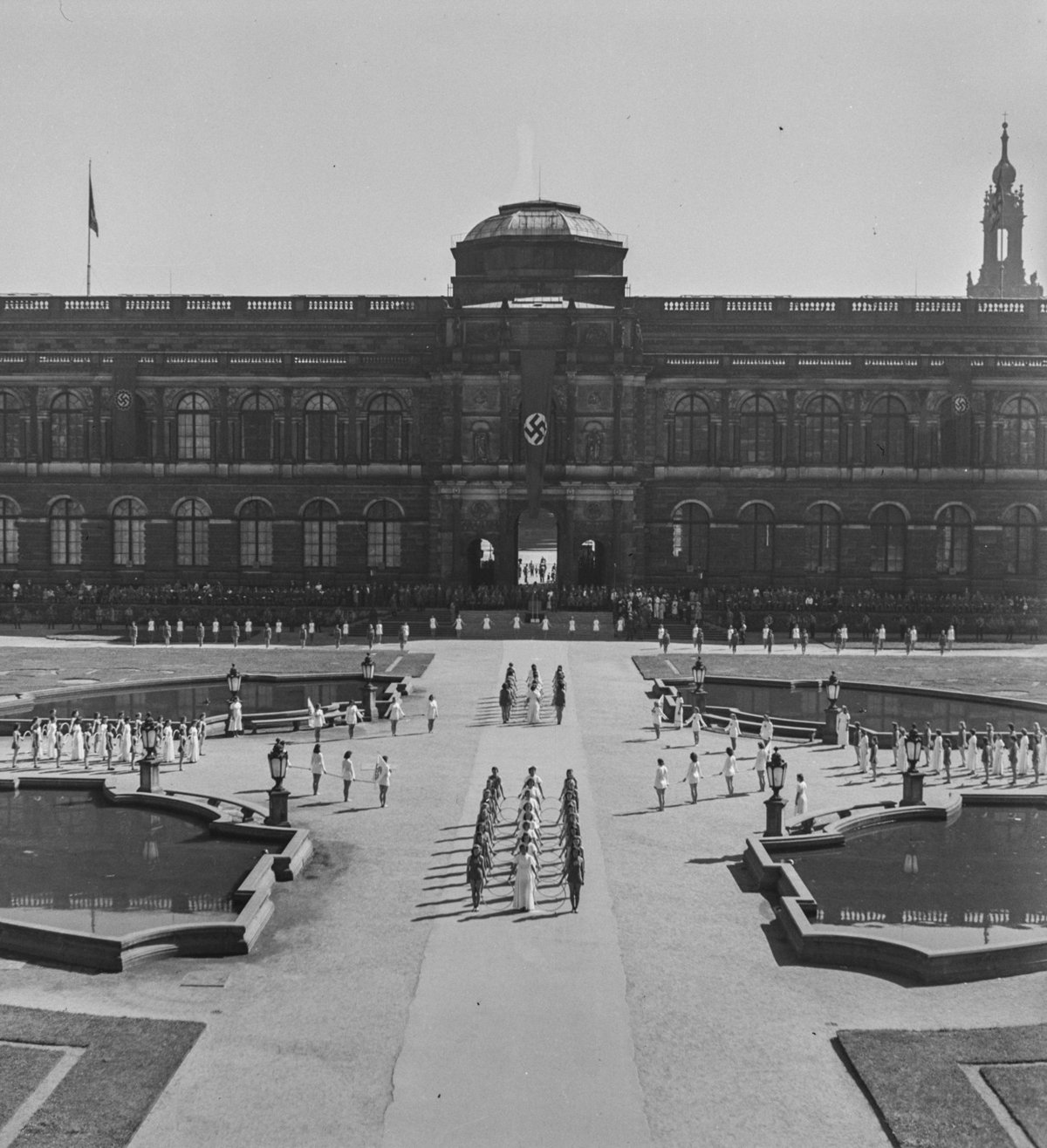
The painting remains at the Semper Gallery for 90 years. It is only taken off display for regularly scheduled restoration work – until the Second World War begins.

OMPG Closing

In 1938, the paintings in the Picture Gallery are taken down for the first time. Fearing a military response to the so-called Sudeten crisis, they are stored in the cellar and on the interior walls of the Zwinger.


Although they are returned to the gallery shortly afterwards, they are taken down and secured once more before the invasion of Poland in September of 1939. This time, it will be longer before the Madonna of Saint Sebastian returns.

Storage in the Vicinity and in Radmeritz

Eventually, the pictures are sent to different storage facilities in the vicinity. The largest among them is located at the Albrechtsburg in Meissen (“storage site S”).

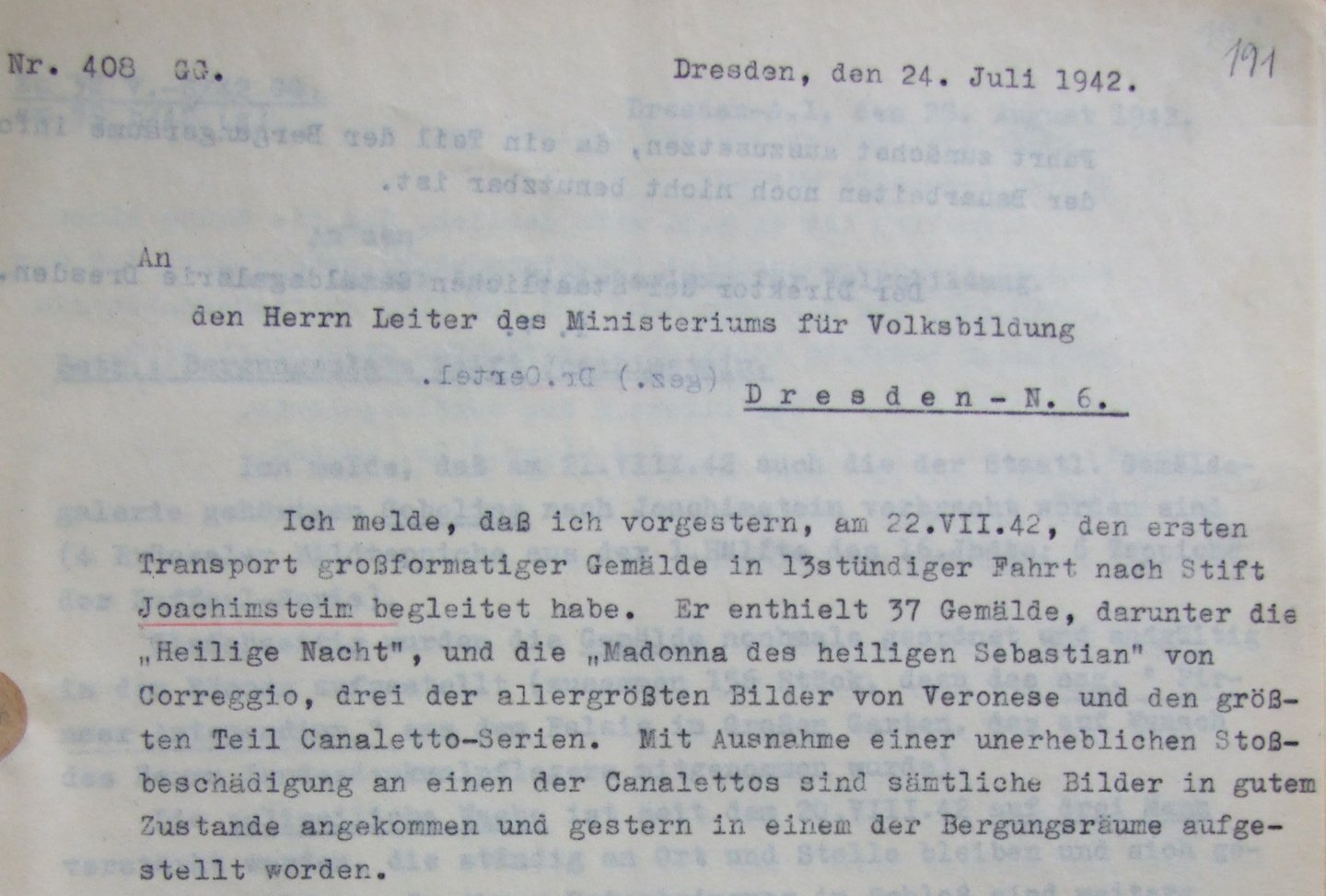
Correggio’s Madonna, along with 156 other large format paintings, is stored south of Örlitz in Radmeritz, tody Radomierzyce, at the castle of Joachimstein Abbey (“storage site J”). 

Document Relating to the Transfer to Joachimstein Abbey

Lohmgrund

When the Wehrmacht’s offensive in the East grinds to a halt in 1943 and the Red Army advances as part of the so-called summer offensive, work begins on setting up a new hiding place. The storage site in Radmeritz is closest to the front and is evacuated in the fall of 1944.


A railway tunnel at the Lohmgrund south of Pirna becomes the new storage location (“storage site T”). Towards the end of the war, 380 paintings are kept here, among them the Madonna of Saint Sebastian and Raphael’s Sistine Madonna.

After the surrender of the German Reich, special units of the Red Army look for the paintings from the Dresden collection. The so-called trophy brigades are tasked with recovering German cultural artifacts to compensate for Soviet war losses.

In May of 1945, they take the paintings from the Rottwerndorf tunnel. First, they are brought to Pillnitz Castle, where the trophy brigades collect and inspect their finds.

Pushkin Museum

From there, the Madonna of Saint Sebastian is brought to Moscow by train as one of the 600 most important paintings, arriving on the 10th of August. It is taken in as part of the Pushkin Museum’s collection and put into storage.

A Picture Returns (1955 - today)

The Madonna of Saint Sebastian at the Old Masters Picture Gallery

After the war, the USSR finds itself locked in a contest of ideologies with the USA. Artworks captured as spoils of war become the subject of political manoeuvring on both sides. For ten years, the Soviet Union keeps the Dresden paintings hidden away in the storerooms of its museums.

Dresden is part of the GDR, a Soviet sister state, whose sovereignty is officially recognized by the USSR in 1954. Split Germany becomes one of the main stages for the ideological battle during the Cold War.

Repatriation Announcement

Whilst the whereabouts of the paintings are kept secret for years under Stalin and are scarcely allowed to be mentioned in the GDR, a narrative emerges in the USSR following Stalin’s death of rescuing Dresden’s art treasures.


And since the East Germans have now become a sister state of the Soviet Union, big sister can return them to little sister in a high-profile gesture sealing their kinship of spirit. In the spring of 1955, the repatriation is announced. The Madonna of Saint Sebastian remains in the family.

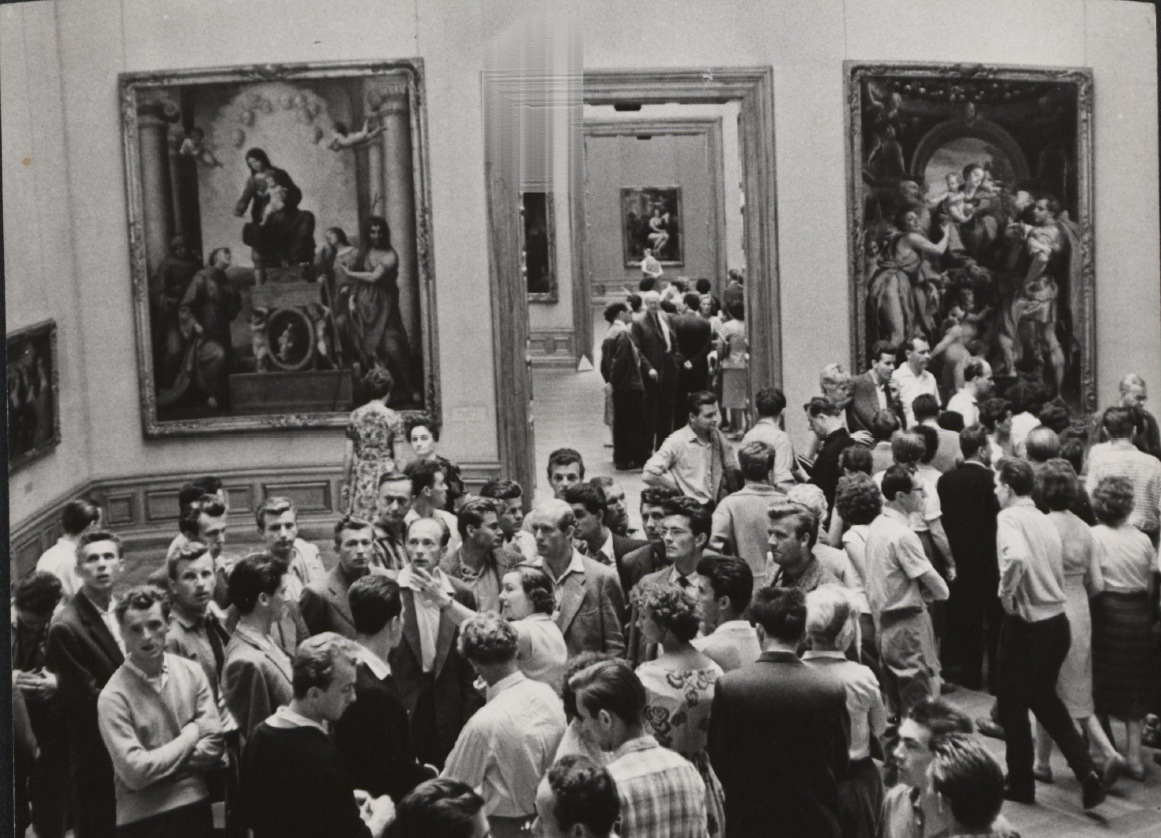
Exhibition at the Pushkin Museum

But before that, they are shown to Moscow audiences in a great exhibition at the Pushkin Museum. While barely anyone could have known about the existence of the paintings in Moscow before, the exhibition draws 1.2 million visitors in five months.

The Soviet painting passport describes the condition of the Madonna of Saint Sebastian in 1955 as “satisfactory”. However, it states that the painting requires constant further monitoring. Restoration work is also detailed – for example, that areas of flaking that had occurred in 1952 were secured using sturgeon glue.

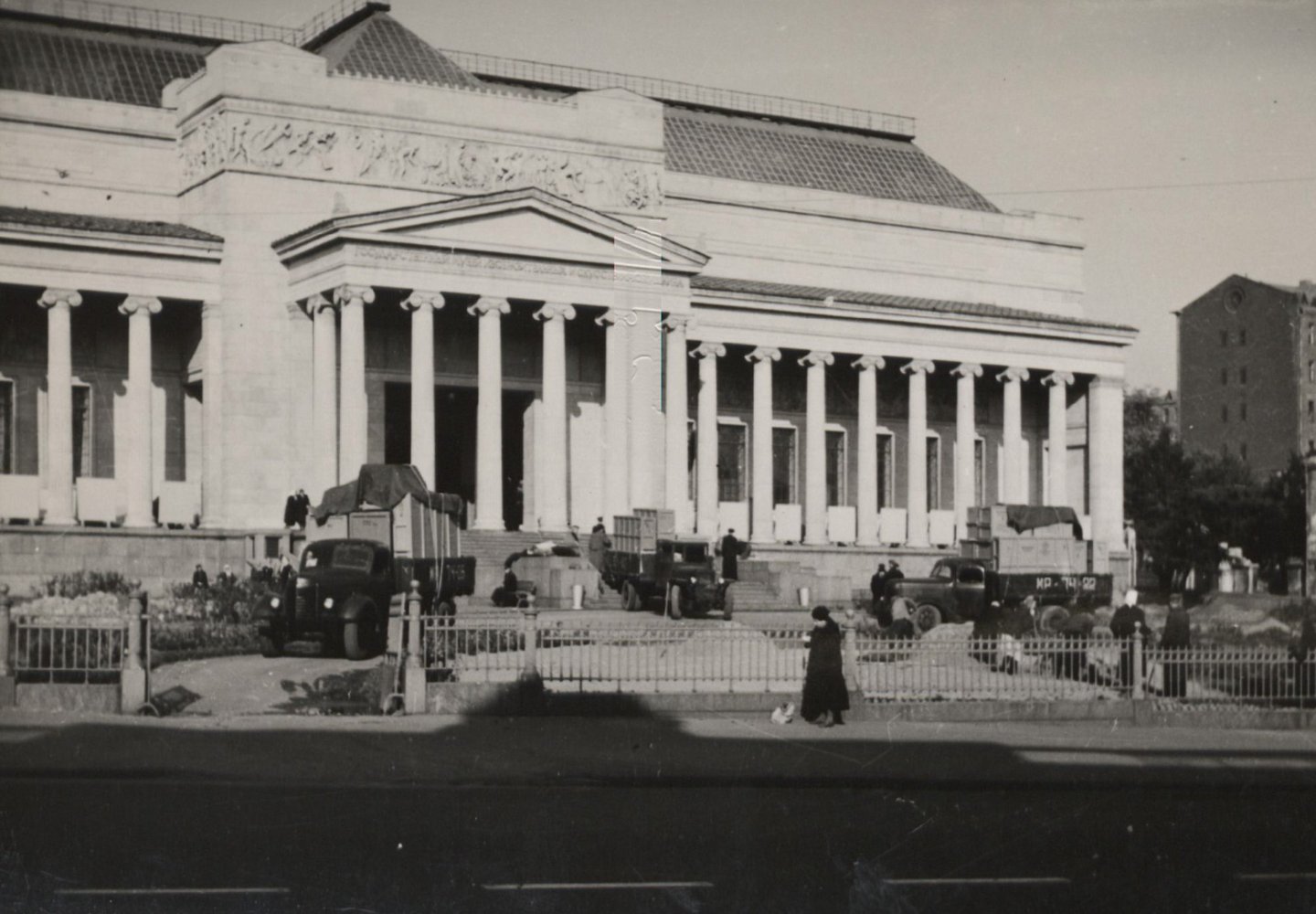
Rückgabe Gemälde

In October of 1955 the Madonna of Saint Sebastian and 1239 other paintings are packed in crates and loaded onto a lorry to return them to the GDR.

Berlin

But the pictures do not come to Dresden right away. First, they are displayed in a celebrated exhibition at the Berlin National Gallery.

Semper Gallery

At last, in May of 1956, the artworks return to Dresden. The Madonna of Saint Sebastian is placed in the newly rebuilt east wing of the Semper Gallery, where the antiques collection is housed today. The west wing is still under construction at this time and will open four years later.

Rundfunkarchiv Films

Start of the Restoration

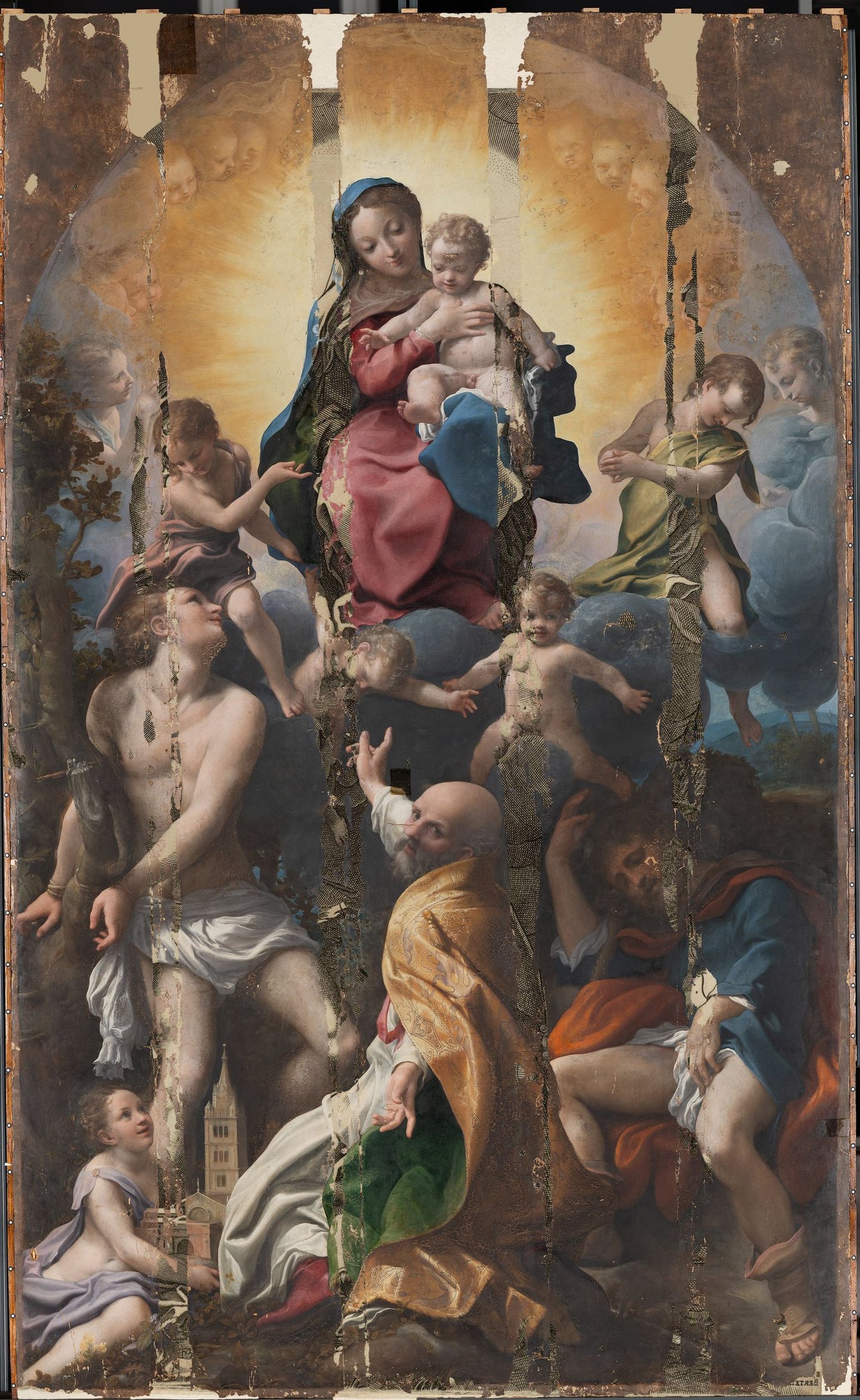
In 2022, the State Art Collections Dresden commence with a new restoration. The public is invited to watch the process, as the restoration takes place in a showroom.

The painting’s restoration history is extensively studied. At this point, the painting has seen more than twelve restoration procedures.


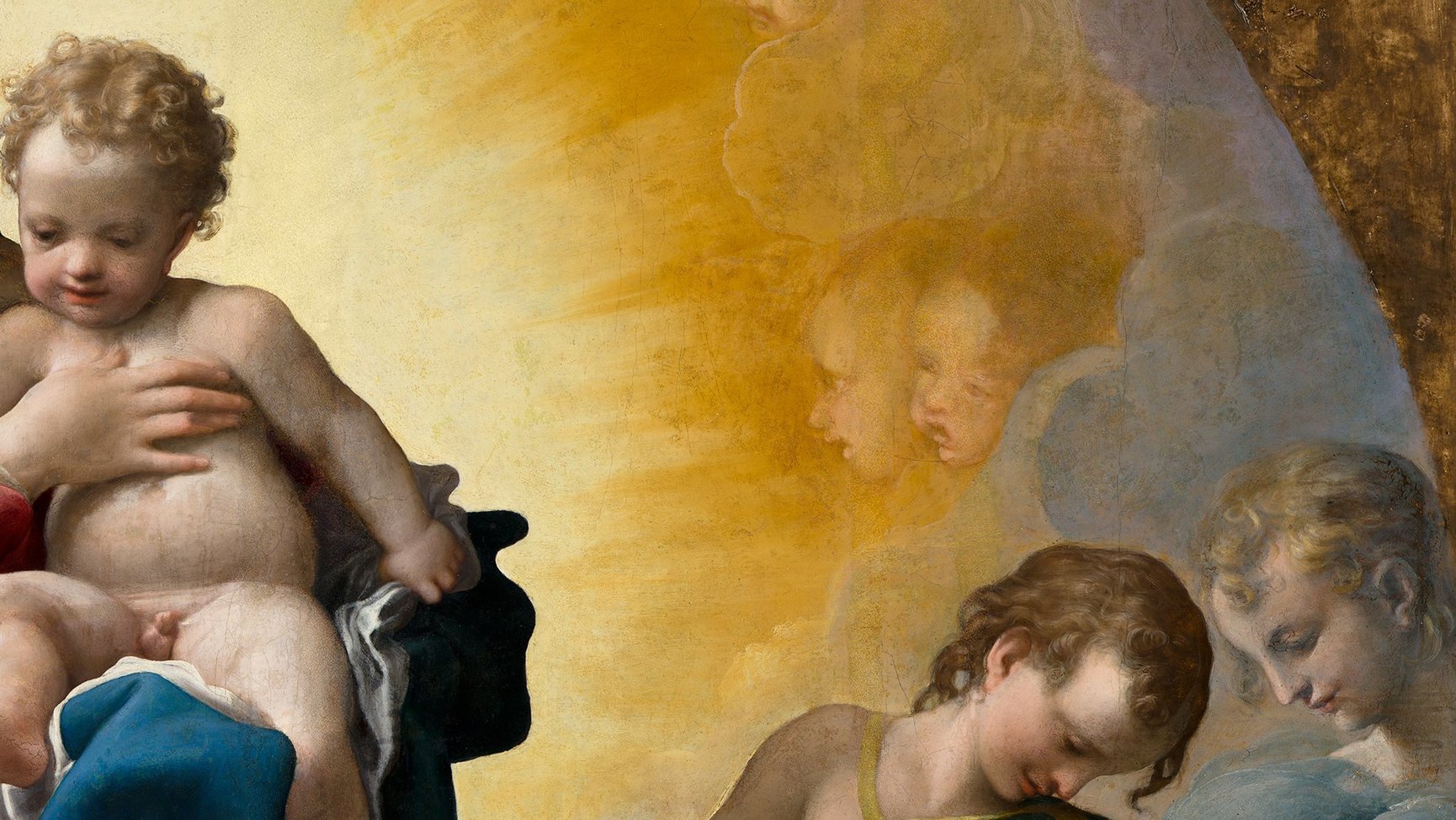
To get the picture to most closely approximate its original state, most of the previous restoration measures are reversed. In June of 2024, there is barely any material left on the painting that was not applied by Correggio himself.

Refilling the Losses

Cristofano Bertelli’s copy from the 16th century becomes a vital reference point for the proper repair of the losses.

Steffi Retouching

In late 2025, the restoration is finished.

Ueberblendungen Zustaende Restaurierung

From the 9th of June 2026, it can be viewed at the exhibition “Correggio. Movingly human". Afterwards, the Madonna of Saint Sebastian will return to the permanent exhibition of the Old Masters Picture Gallery.

Timeout

Touch the screen to continue.

10